What is Alzheimer’s Disease?
Alzheimer’s disease is a neurodegenerative condition that gradually damages brain cells, leading to memory loss, thinking skills, and the ability to do daily activities. It is the most common cause of dementia, especially in older adults. The disease gets worse over time and currently has no complete cure, early diagnosis and proper management can help improve quality of life.
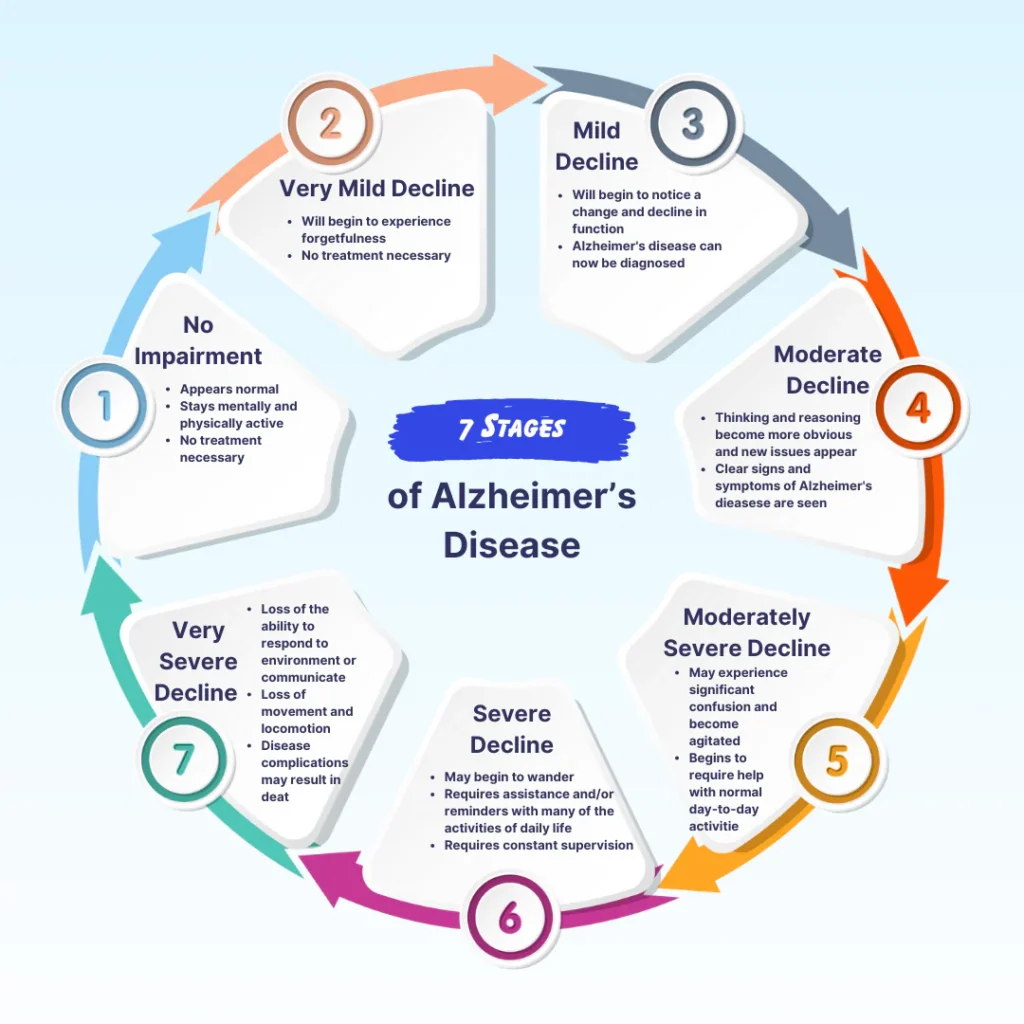
Stages Of Alzheimer
How Alzheimer’s Disease Affects the Brain?
In Alzheimer’s disease:
• Brain cells become damaged and die
• Communication between brain cells is disrupted
• The brain slowly shrinks
Two abnormal changes occur in the brain:
1. Amyloid plaques: sticky protein clumps that build up between brain cells
2. Tau tangles: twisted fibers inside brain cells that stop them from working properly
These changes prevent the brain from functioning normally.
Causes and Risk Factors
The exact cause of Alzheimer’s is not fully known, but several factors increase the risk.
Main risk factors:
• Age (risk increases after 65)
• Family history and genetics
• Head injuries
• Heart problems (high blood pressure, diabetes, obesity)
• Unhealthy lifestyle (poor diet, lack of exercise, smoking)
Early Signs and Symptoms
Symptoms develop slowly and worsen over time.
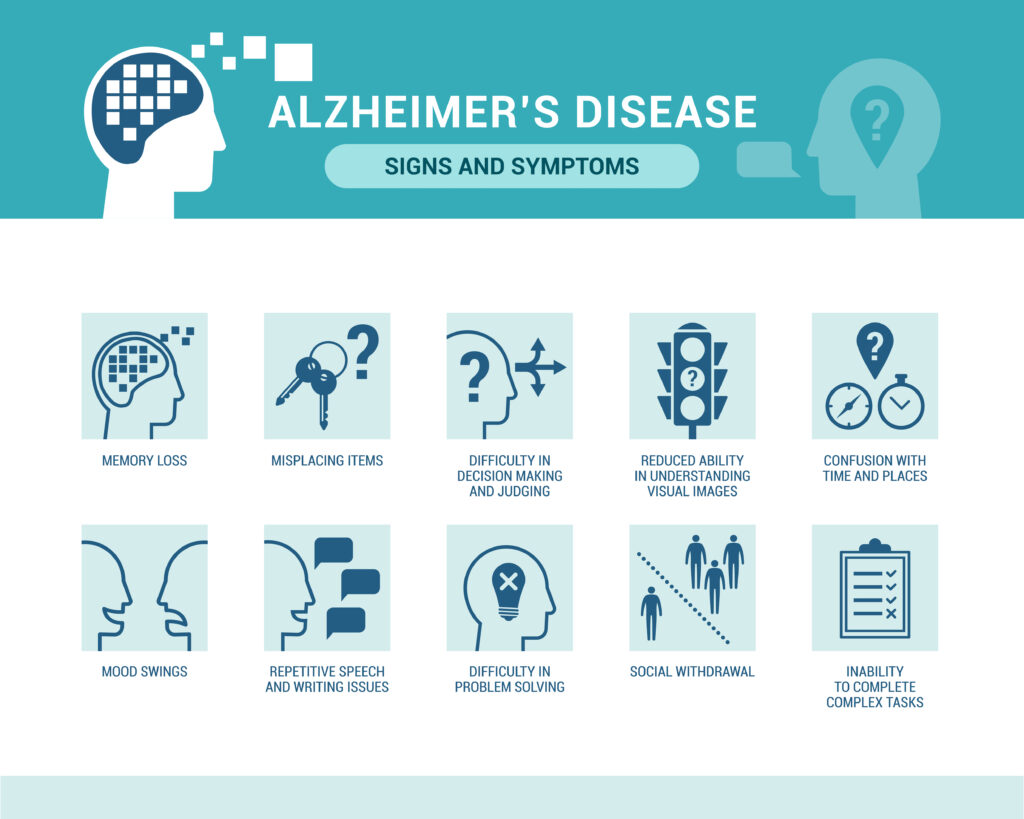
Early stage
- Forgetting recent events or conversations
- Misplacing items
- Difficulty finding words
- Trouble planning or solving problems
Middle stage
- Increased memory loss
- Confusion about time or place
- Difficulty recognizing familiar people
- Mood changes (anxiety, anger, depression)
Late stage
- Severe memory loss
- Loss of ability to speak clearly
- Need for full-time care
- Difficulty eating, walking, and swallowing
Diagnosis
• Medical history and mental tests
• Brain imaging (MRI or CT scan)
• Memory and thinking assessments
• Blood tests (to rule out other causes)
There is no single test, so diagnosis is based on several evaluations.
Treatment of Alzheimer’s Disease
There is no cure, but treatment focuses on slowing symptoms and improving daily life.
1- Medications
For Mild to Moderate
Cholinesterase inhibitors are commonly prescribed to treat mild to moderate Alzheimer’s disease. These medications can help ease certain cognitive symptoms and may also reduce some behavioral problems. The most widely used drugs in this group include Razadyne® (galantamine), Exelon® (rivastigmine), and Aricept® (donepezil).
Although researchers do not yet fully understand their exact mechanism, studies suggest that cholinesterase inhibitors work by slowing the breakdown of acetylcholine, a chemical messenger in the brain that plays an important role in memory and thinking. As Alzheimer’s disease advances, the brain gradually produces less acetylcholine, which explains why the effectiveness of these medications may decrease over time.
There are no published studies that directly compare these drugs with one another. Since they act in similar ways, switching between them usually does not lead to major differences in outcomes. However, individual patients may respond better to one medication than another, so treatment is often tailored to the patient’s specific needs.
For Moderate to Severe
Namenda® (memantine) is a medication used in the treatment of moderate to severe Alzheimer’s disease. It belongs to a class of drugs known as N-methyl D-aspartate (NMDA) antagonists. Memantine works by helping to regulate brain activity and can reduce the severity of symptoms. While it does not cure the disease, the medication may help some individuals preserve daily functioning and independence for a longer period than they would without treatment.
Namenda® is believed to work by regulating glutamate, an important brain chemical. When produced in excessive amounts, glutamate may lead to brain cell death. Because NMDA antagonists work differently from cholinesterase inhibitors, the two types of drugs can be prescribed in combination.
The FDA has also approved Aricept®, the Exelon® patch, and Namzaric®, a combination of Namenda® and Aricept®, for the treatment of moderate to severe Alzheimer’s disease.
2- Lifestyle and Supportive Care
Healthy habits can help brain function:
- Regular physical exercise
- Balanced diet (fruits, vegetables, fish)
- Mental activities (reading, puzzles)
- Good sleep routine
- Social interaction
3- Emotional and Caregiver Support
- Counseling for patients and families
- Support groups
- Safe home environment
- Routine and familiar surroundings
Caregivers play a very important role in managing the disease.
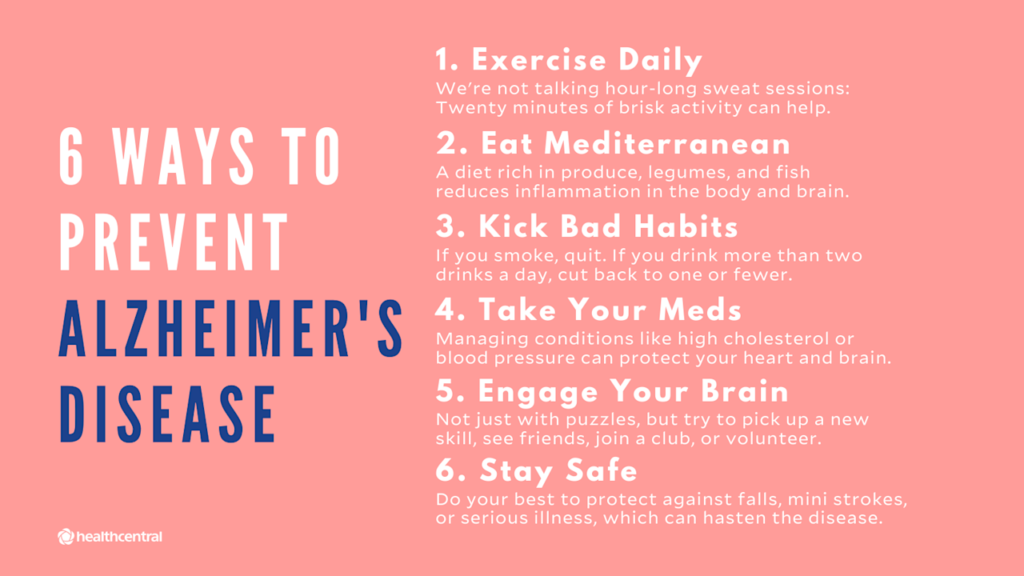
4- Prevention and Risk Reduction
Alzheimer’s cannot always be prevented, but risk may be reduced by:
- Staying mentally active
- Controlling blood pressure and diabetes
- Avoiding smoking
- Eating healthy foods
- Exercising regularly
Conclusion
Alzheimer’s disease is a serious and progressive brain disorder that affects memory, thinking, and daily life. While there is no cure yet, early diagnosis, medication, healthy lifestyle choices, and strong support systems can greatly improve quality of life for patients and caregivers.
Leave a Reply